
Why was Du’Plessis Kirifi snubbed from Rennie’s All Black Squad (Again)?
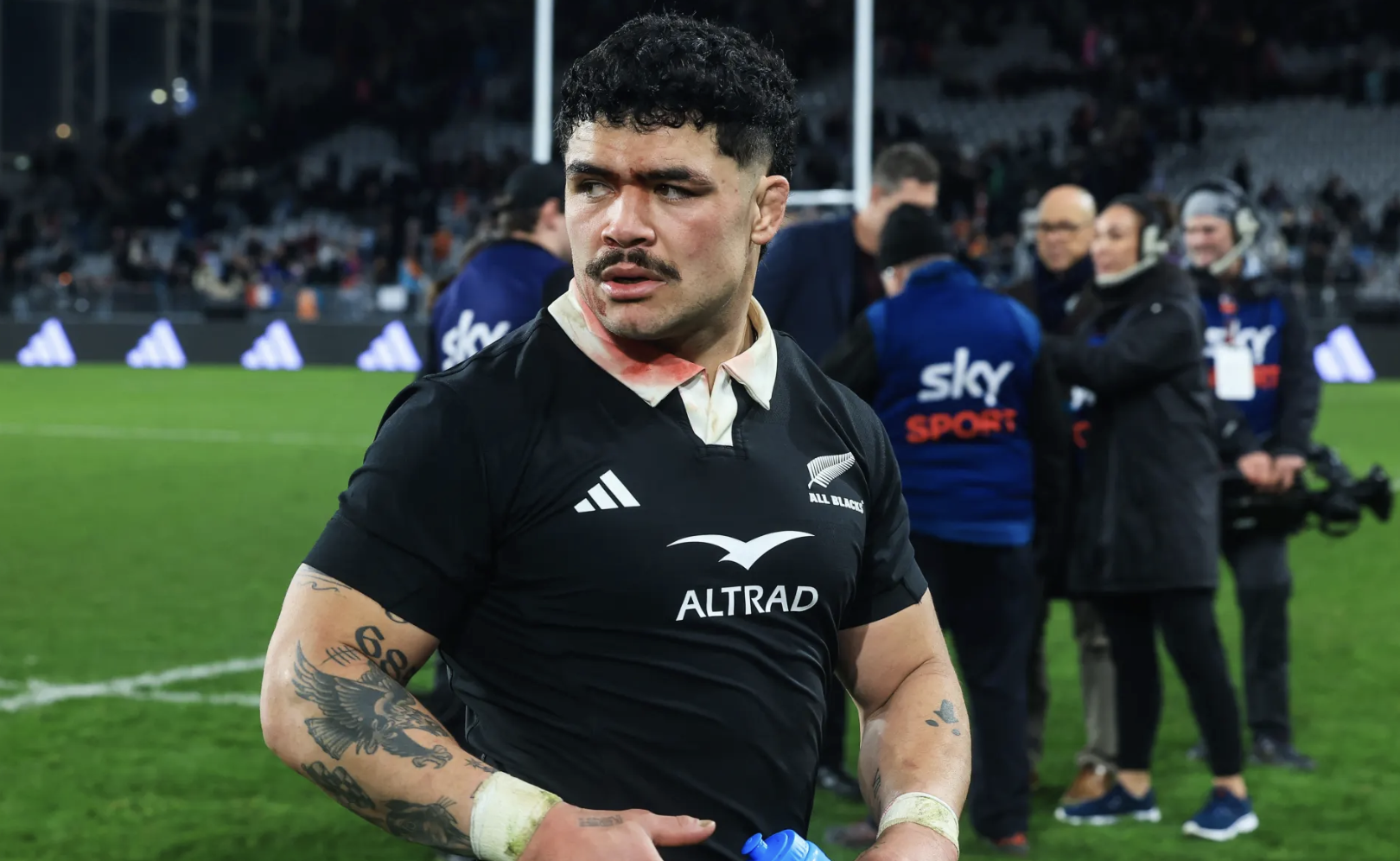
Dave Rennie and co. have announced their 44-man squad to take on South Africa in the Greatest Rivalry tour, and there is one name on everyone’s lips - Du’Plessis Kirifi. The Hurricanes title winning co-captain has once again missed the cut for the extended squad to travel to South Africa this August, after initially missing selection for the 34-man Nations Championship squad. All Black fans, and Kirifi himself, could have been forgiven for thinking Kirifi’s name would have been one of the first added to the squad post the Nations Championship, but once again his name failed to appear in the squad announcement. The big question many fans are now understandably asking is why? And where does Kirifi go from here?
Lineout
The elephant in the room that keeps being brought up is the lineout. From a physical standpoint, Kirifi is shorter than all of the loose forwards selected to go to South Africa. Kirifi stands at 1.81 metres; only three of the eight loosies selected are shorter than 1.90 metres: Peter Lakai (1.86m), Wallace Sititi (1.87m), and Semisi Tupou Ta’eiloa (1.85m). Kirifi’s height essentially rules him out of being a lineout option at test level. The height of the All Blacks loose forward trio has been a constant discussion since the departure of Shannon Frizell following the 2023 Rugby World Cup. However, Tupou Vaa’i’s performance in the six jersey at Eden Park against the Irish almost guaranteed Vaa’i will be starting on the side of the scrum come the opening test against the Boks. With a converted lock at six, you could argue there is space for a smaller loose forward such as Kirifi in the side, but there is no doubt it is an unfixable weakness in Kirifi’s game that you cannot even use him as a dummy option in a lineout. Is Kirifi’s height truly what is holding him back though? The South Africans have their own small loosie in Kwagga Smith, who has proven to be one of the world’s elite loosies despite his size. Smith has played on both the side of the scrum as well as number eight for the Boks in recent years, and has consistently featured as a key part of the bomb squad, proving there is a role for smaller loose forwards at the top of test match rugby.
Balance of the Loose Forward Trio
Another concept which may have contributed to Kirifi’s omission is the balance of the loose forward trio. It is a concept All Blacks fans became familiar with during the Ian Foster era, particularly in 2021 and 2022. At that time, the names typically surrounding selection discussions were Sam Cane, Akira Ioane, Shannon Frizell, Dalton Papali’i and Ardie Savea. Cane’s spot was locked in as captain, and Savea was the All Blacks’ best player. As a result, the six jersey left three contenders: Shannon Frizell, Akira Ioane and Dalton Papali’i. There was no doubt at the time that Dalton Papali’i was in the best form out of the three, and Foster attempted to logjam him into the side at six against the Irish. It did not work. That experiment lasted a single game, which the All Blacks lost 23-12 to the Irish. Papali’i no doubt deserved to be in the side, but Sam Cane had already filled the role of a workhorse openside. As a result, it was no coincidence the All Blacks started to really hit form in 2023 when they found a better fit alongside Savea and Cane in Frizell. Frizell’s career year in 2023 gave the All Blacks a genuine enforcer type who could also provide another lineout option alongside the dynamic Savea and workhorse Cane.
During the Scott ‘Razor’ Robertson era, Razor seemed to come to a consensus that his first-choice loose trio was Lakai, Sititi and Savea. Lakai, Sititi and Savea are all similar players; they’re explosive in the carry, dynamic and lethal at the breakdown, particularly Lakai and Savea. Due to this, one of them at least had to play a role that did not centre around their strengths. It was often Lakai that found himself in the middle of the field carrying around the ruck and making a lot of tackles. It is probably fair to say Lakai, Sititi and Savea are still the three best loose forwards in the country, despite Lakai and particularly Sititi having a quiet Nations Championship, but this does not necessarily mean they are the best fit as a trio. Rennie’s selection of Luke Jacobson at seven raised some eyebrows, but he has provided a balance to the loose trio with his work rate, anticipation and infamous concrete shoulders that has allowed Savea in particular to remain on his feet exploring opportunities at the breakdown defensively and getting more involved offensively. Clearly, the mould for the seven in Rennie’s system is that of Luke Jacobson; Kirifi does not exactly fit that mould. While I have no doubt Kirifi could execute a similar role to what is expected of Jacobson, he is at his best when he is on his feet, pushing the limits at the ruck and using his leg drive, power and agility in the carry. Kirifi's strengths therefore overlap significantly with Savea’s, who is the first name on the team sheet each test as captain, making it difficult to justify a spot for him in the squad.
“Point of Difference”
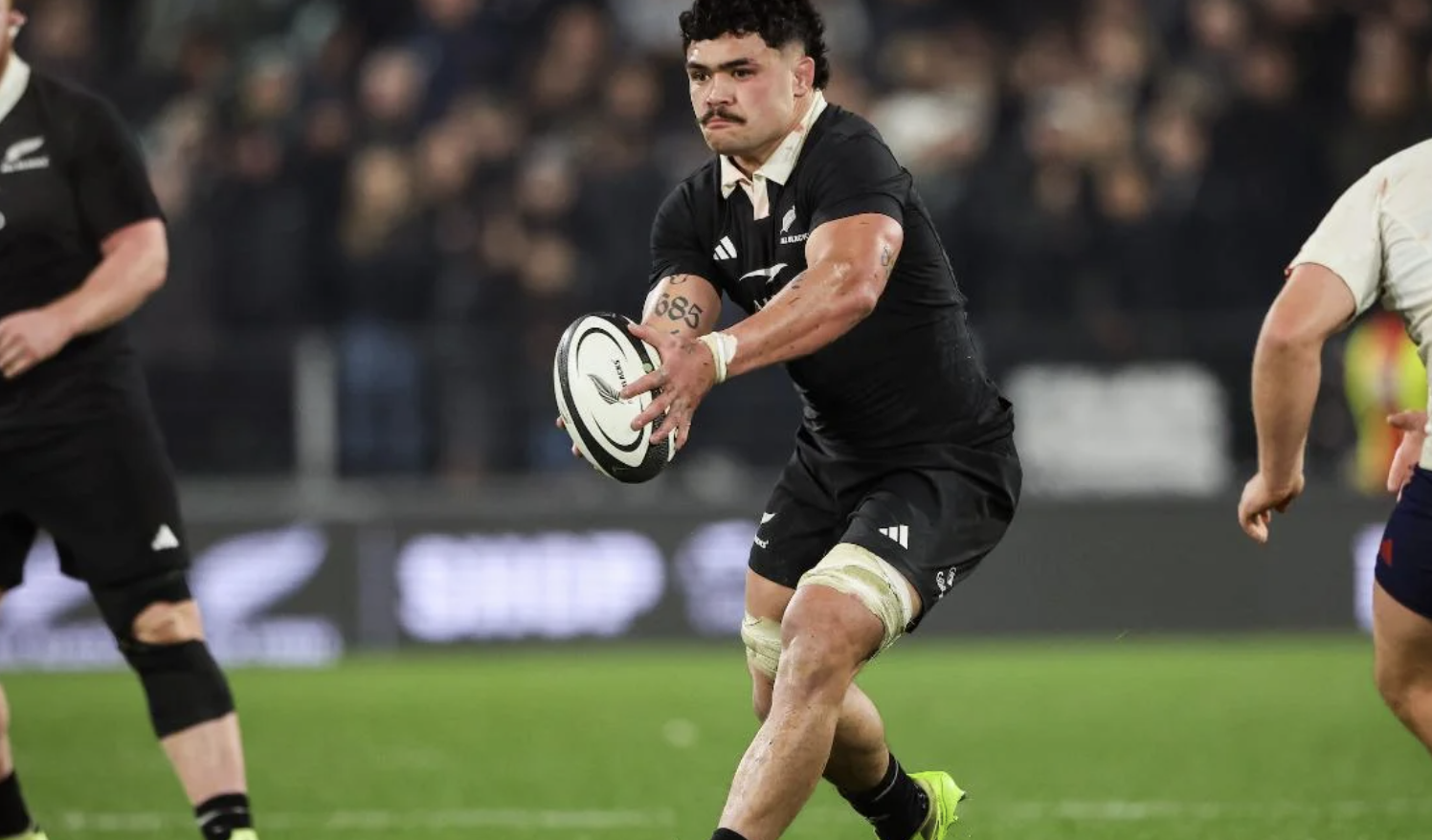
When discussing the two loose forwards added to the squad in Ethan Blackadder and Semisi Tupou Ta’eiloa, Rennie mentioned “point of difference” in his press conference. Tupou Ta’eiloa’s point of difference is relatively obvious; it’s his carrying ability and absolute brute force. No forward beat more defenders in Super Rugby Pacific this year with 45, unless of course you consider Leicester Fainga’anuku a permanent member of the forwards department; I do not. Tupou Ta’eiloa’s ability in the carry could be the exact point of difference needed to break a game open against the Springboks at altitude, and will be a hard option to ignore should Rennie go with a 6-2 split on the bench. As for Blackadder, in my opinion he is the hardest grafter in New Zealand rugby. Blackadder averaged 16.2 tackles per game in Super Rugby Pacific, the most of any player across the competition. Blackadder will tackle anything that moves and hit rucks until his body gives out on him; his body and injury history have been his biggest weakness over his career, but part of that I believe is simply because of how hard he works. Blackadder missed selection last year due to being plagued by injuries, but in 2024 he was one of the All Blacks best in their two tests in South Africa. His experience of playing in the Republic before will also be crucial, and he could be a candidate to captain the All Blacks mid-week, as many expected Du’Plessis Kirifi to do.
So where does Kirifi go from here? Well, the obvious answer is to chase a contract overseas. Kirifi has consistently turned down opportunities to take his talents offshore, but after repeated snubs from Rennie, the contracts may be growing hard to ignore. In saying that, I’m not sure I’d be so quick to jet off. The All Blacks showed great improvements and potential in their three Nations Championship tests, but there is no doubt South Africa are the true test of where this All Blacks side sits. While it is absolutely the worst-case scenario, if the All Blacks lose the series 4-0 or even 3-1, then change will beckon. Playing South Africa has always been the test of All Black teams and players; some players will come back from South Africa having cemented their spot in a black jersey, and others will do the opposite. While it is easy to think Rennie’s consistency in selection so far shows how he plans things to look heading to the Rugby World Cup in Australia next year, international sport is rarely that straightforward. There will be opportunities for many players on the fringe to get themselves into the environment and prove their worth to coaches and selectors, if they are patient enough to wait for the opportunity to arise. Whether Du’Plessis Kirifi plays a part at some point in South Africa is yet to be seen, his large contingent of fans from all across the country, not just Hurricanes territory, will no doubt be hoping he will and that he stays on deck through to 2027 to fight for a place at the Rugby World Cup.
